
Manufacturing in the Crossfire
UK SME Manufacturers: Navigating an Unprecedented Convergence of Risk

I have spent the last six years embedded deep inside a UK manufacturing business. Not advising from a distance but leading from the inside: active on the shop floor in Redditch, looking over the in-house toolroom, talking to customers whose supply chains are under pressure, and trying to make the numbers work in an increasingly uncertain global landscape – a volatile environment that gives you very little margin for error. So when people ask me how UK SME manufacturing is doing, I don’t reach for an academic tome. I look at our horizon of life – the real-time sales order book.
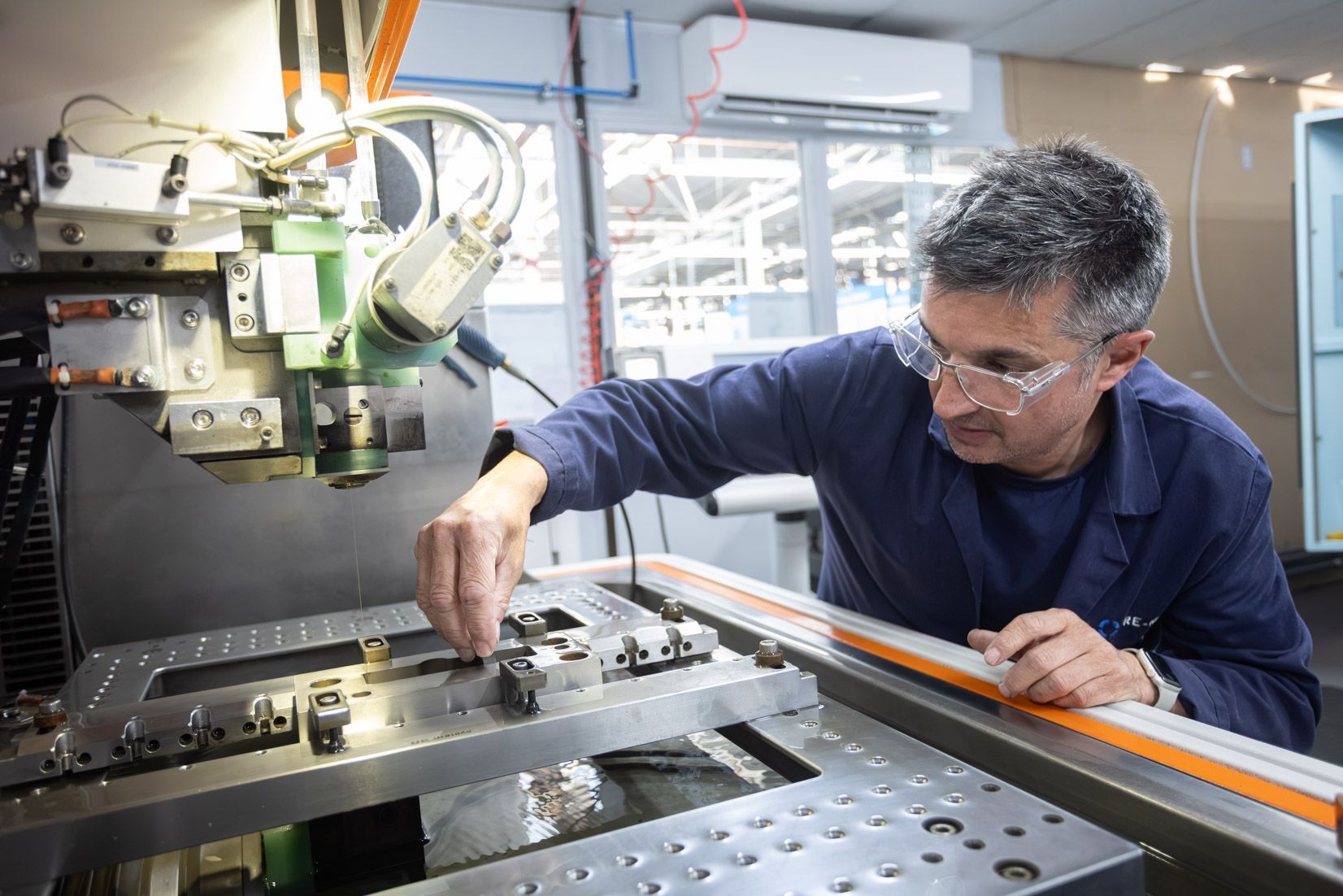
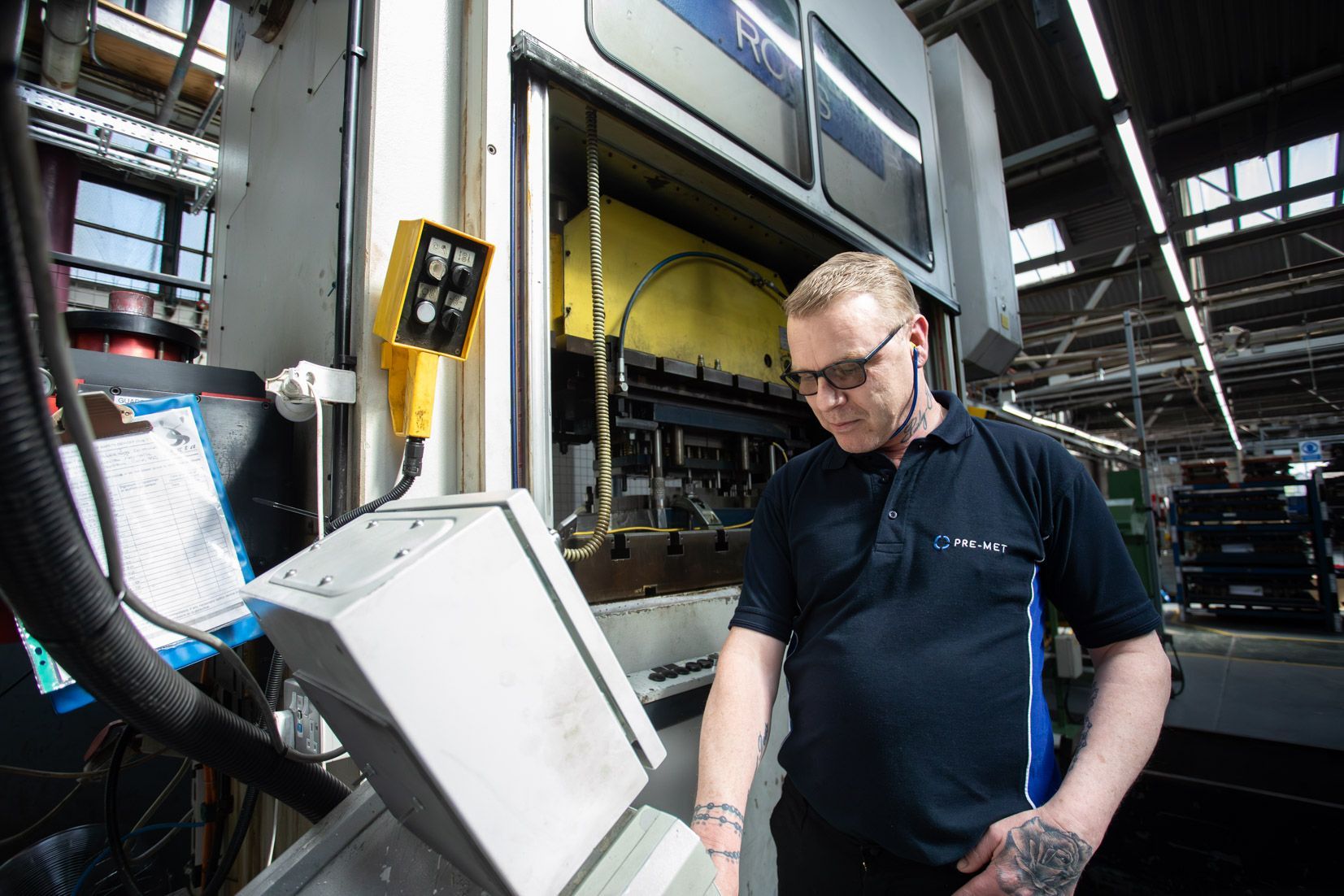
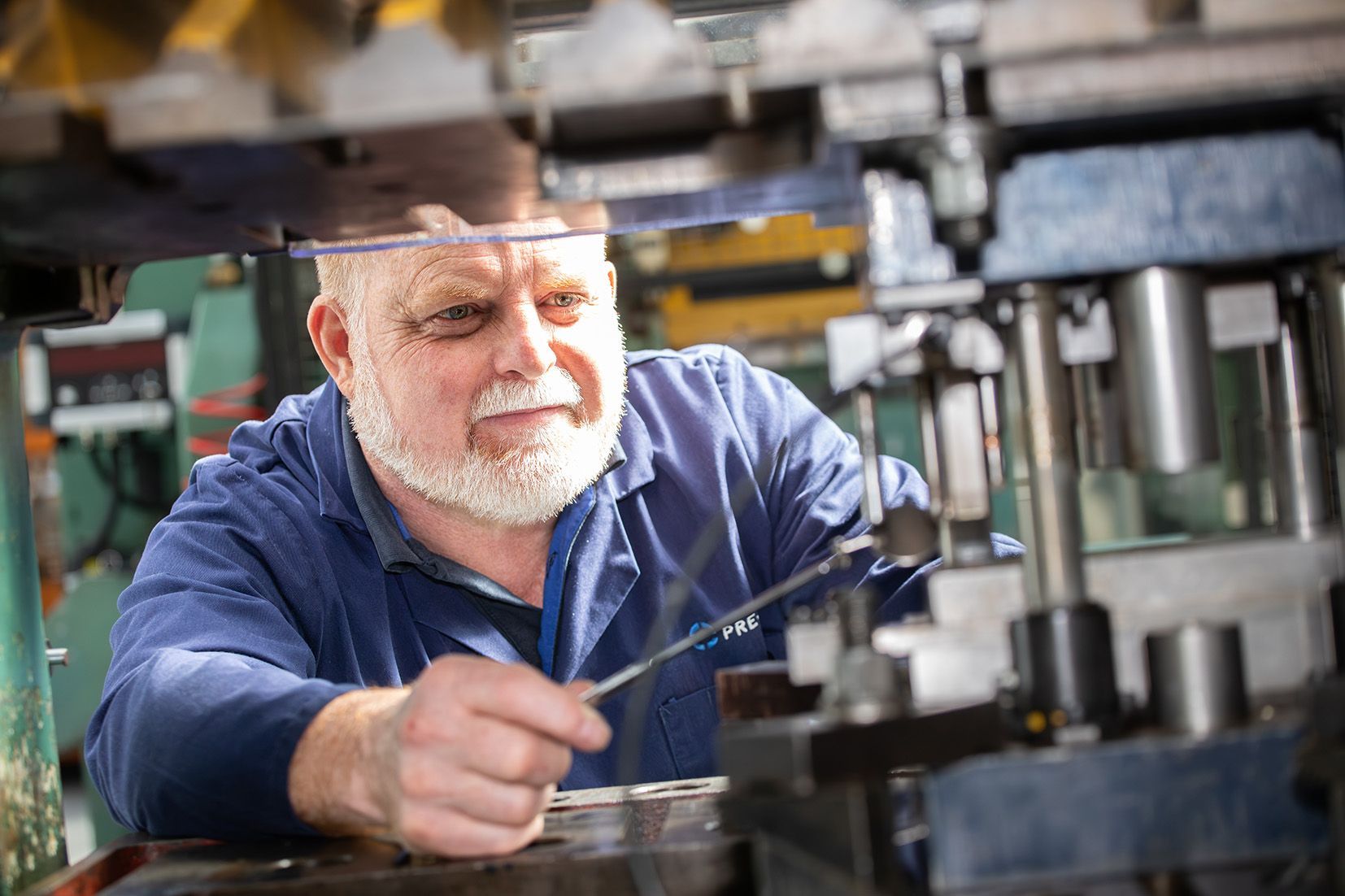
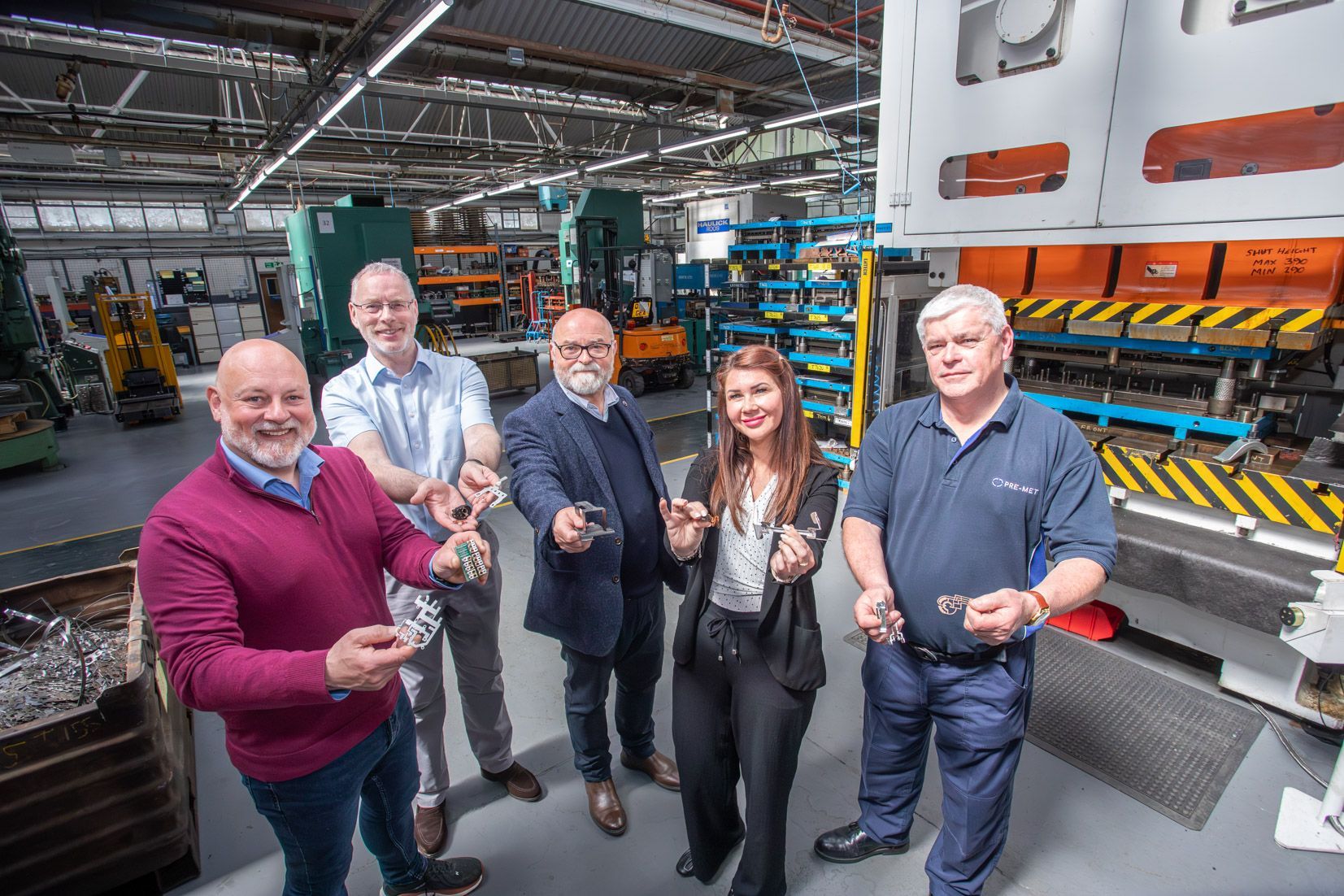
At Pre-Met, we are genuinely building momentum – precision metal pressings and stampings for aerospace, automotive, construction, transport, medtech, and, increasingly, defence. Over the last five years we have invested in new technology, taken on new people, made acquisitions, and entered new markets.
There is real change in parts of the sector. But the headwinds are the most severe I have seen in thirty-five years, and the perfect storm of wars and conflicts, a global cost of living crisis, accelerating technology change, and political uncertainty in every direction are all hammering any remaining opportunity to balance the books – let alone achieve sustainable profit.
That is what makes this moment genuinely different. What follows is my honest read of four forces bearing down on UK SME manufacturers right now:
1) the latest twists to the steel tariff and import regime that are making UK manufacturers less competitive than their EU and Asian counterparts;
2) the delay to the UK Defence Investment Plan and what it is actually doing to companies in the defence supply chain;
3) the Chinese and Far East EV offensive and what it means for UK and EU automotive component suppliers; and
4) the Government’s budget-busting employer National Insurance and National Minimum Wage changes that have added a structural cost to every manufacturer with a workforce.
None of these is a new story. Together they form a picture that demands a clear-eyed response.

Steel: a game of tariff roulette we didn’t choose to play
The UK exported around 300,000 tonnes of steel to the US in 2017, worth roughly £490 million. By 2023 that had fallen to 165,000 tonnes and £388 million, battered by Section 232 tariffs that started in 2018 and have escalated sharply since. In June 2025 the US raised those tariffs to 50% for almost all trading partners. The UK was held at 25% under the Economic Prosperity Deal – a relative reprieve, not a resolution. On 2 April 2026 the rules changed again: tariffs now apply to the full customs value of steel, not just its metal content, and only steel ‘melted and poured’ in the UK qualifies for the preferential rate.
That is the export side. Here is the side that gets less attention and matters more to most UK manufacturers.
From 1 July 2026, the UK government is cutting steel import quotas by 60% and imposing a 50% tariff on any imports above those limits. The intention – to protect British Steel and domestic producers from cheap, state-subsidised steel diverted by US and EU protectionism – is right. The consequence for downstream manufacturers, the businesses that buy steel as a raw material, is a serious competitive disadvantage that the announcement barely acknowledges.
A UK metal pressings manufacturer buying above-quota steel from 1 July faces a 50% tariff on that input. Their German or French counterpart buys from EU producers within the single market without that cost. Their Asian competitors produce their own subsidised steel at prices that bear no relation to a market rate. The UK manufacturer is caught between a policy designed to protect one part of the steel industry and a market reality that makes their finished goods more expensive to produce than the competition. That is not theoretical. It lands directly in the quote you are preparing for a customer who is also being quoted by suppliers in Germany, Poland, and South Korea.
UK steel demand has contracted 16% since 2018 while import quotas have been liberalised by 22% oversized and ineffective simultaneously. Global excess capacity is heading toward 721 million tonnes by 2027, more than a hundred times UK annual production. You cannot forward-contract steel with the same confidence you could three years ago. You cannot price a fixed-cost contract twelve months out with certainty about your material costs. Protecting producers at the expense of processors is not a steel strategy. It is a choice about who bears the cost – and right now, that choice is landing on manufacturers who are already under pressure from every other direction.

Defence: Short arms, deep pockets – where are the contracts?
In June 2025, Pre-Met obtained JOSCAR approval – the global best practice supplier portal used by thousands of major OEMs, tier-one suppliers, and supply chain companies across the UK and Europe. We qualified for the UK MoD Procurement portal registration too. We passed every criterion and compliance check. We went to the Farnborough JOSCAR ‘meet the buyer’ session. Defence spending is heading toward 3.5% of GDP by 2035, and the government has committed to increasing direct MoD spending with SMEs by £2.5 billion by 2028. We have done the work. We are ready.
And then we wait.
The UK Defence Investment Plan – the ten-year framework that was supposed to tell industry where the money is going and when – was promised in autumn 2025. It did not arrive. It was still unpublished at year end. As of April 2026 the Ministry of Defence is still, in its own words, ‘working flat out’ to finalise it. In testimony to the defence select committee in March 2026, trade body executives were direct: SMEs across the defence supply chain are ‘bleeding cash’. Some have had to exit the sector. Others are surviving only because major prime contractors are bailing out their supply chains. MoD payments outstanding in the supply chain are compounding the problem. The ambition is not wrong. What is wrong is the gap between the announcement and the contract, in which real businesses run out of cash, real workers lose jobs, and real capability – the kind that takes years to build – disappears from the UK industrial base. The House of Commons defence committee said it plainly: industry ‘lacks an adequate signal’ from government.
I said it at the Made in the Midlands Westminster Parliamentary Reception in December 2025 and I will say it again: UK manufacturing is full of exceptional people and businesses who want to do this work. The capability exists. What has been missing is the will to give industry the certainty it needs to invest ahead of the contracts. You cannot build a sovereign defence supply chain by announcing it. You build it by issuing contracts to companies that can deliver, and you issue those contracts when those companies still exist. The SME Commercial Pathway launched in January 2026 is a step, but it is not a complete package yet.

The EV assault: what the automotive disruption actually means in a toolroom
In 2025, BYD outsold Tesla in the UK: 51,422 vehicles to 45,513 – the first major Western market where a Chinese manufacturer outsold Musk’s company. In September 2025 alone, BYD’s UK sales surged 880% year on year. Chinese brands now account for roughly 10% of all new UK car registrations. This is not a trend that is coming. It has arrived.
Every major established European manufacturer outside Toyota saw production volumes plateau or decline in 2025. UK vehicle production fell 15.5% across the year. Volkswagen, Stellantis, Ford – the names that have been sending purchase orders to UK component suppliers for forty years – are running lower volumes, building more of what they do make in lower-cost regions, and managing the transition to electrification with all the financial strain that implies. The market is not disappearing. It is migrating toward players who largely do not have established UK supply chains.
For Pre-Met, which has supplied into automotive for decades, this is not a remote threat. The ICE component that was a reliable long-run order five years ago has a shorter and less certain future today. The EV supply chain is being built differently: faster, with a higher proportion of components manufactured in China and brought into assembly in Europe. BYD’s Hungary plant is designed to produce 800,000 units annually, and their stated intention is to build a complete local supply chain for European production. That supply chain is not currently UK-first.
The answer is not panic and it is not protectionism. The answer is what we have been doing: diversify into sectors where UK supply chain resilience is valued and the quality bar is high enough to matter. Aerospace. Rail. Defence. Medtech. These are sectors where JOSCAR approval, AS9100, TS16949 accreditation, and 100% on-time-in-full delivery count for something. The manufacturers that will come through this are the ones that moved decisively into adjacent sectors before their automotive customers told them the order was ending.

UK National Insurance and the National Living Wage: a structural cost with no mitigation
From April 2025, employer National Insurance rose from 13.8% to 15%, and the secondary threshold dropped from £9,100 to £5,000 per year. You pay more. You pay it on more of each employee’s earnings. The OBR estimated the combined cost at approximately £25 billion a year. That is not a one-off. It is a permanent structural increase in the cost of employment.
The British Chambers of Commerce found 82% of firms say the NI rise will impact their business. For manufacturers – labour-intensive by definition, unable to move their workforce offshore or replace a press setter with an algorithm – the impact is not theoretical. At Pre-Met, every additional employee, every apprentice, every skilled machinist we retain costs more than twelve months ago. Not because their wages have risen. Because the tax on employing them has gone up and kicked in at a lower threshold. For Pre-Met specifically, this is an annual cost shift of £60–70k – the equivalent of two or three full-time operators – for no operational gain whatsoever.
Then there is the National Minimum Wage, rising on top of everything else. This is not an argument against paying people properly. It is an observation about the stacking. In a single twelve-month period, UK manufacturers absorbed higher NI, a higher National Minimum Wage, extremely elevated energy costs, tariff-driven material price uncertainty, the ongoing fallout from post-Covid debt, and the ripple effects of Ukraine and Iran. Alone, each is difficult to navigate. Combined, we face scaling Everest in sliders and beach shorts.
The 940,000 employers seeing higher contributions are not large corporations with treasury teams and flexible global cost structures. They are metal pressings in Redditch, toolmakers in Coventry, precision engineers in the West Midlands – the industrial backbone of the regions the government says it wants to level up. Telling them to absorb the cost or pass it on to customers, when customers are also under pressure and looking for lower prices, is a policy answer that does not survive contact with a real balance sheet.

So what do we do?
I am not writing this to complain. Complaining is not a strategy, and I have spent enough time in distressed businesses to know that the companies which survive difficult periods are not the ones who wait for the environment to improve. They are the ones who face the truth of their position, act on it, and use the difficulty as a forcing function to do the things they should have done anyway.
The strategic response for any SME manufacturer is this: diversify your customer base before you have to. Qualify into sectors that value UK supply chain resilience. Invest in technology and accreditation when you can still afford to, not when your existing revenue is already falling. Review your steel procurement now – before 1 July, not after. Understand your quota exposure, your transitional arrangements, and your above-quota cost on every input line. Manage your cost base with discipline. Face the truth of your balance sheet before HMRC forces the conversation.
At Pre-Met we have been doing this. The QSP acquisition in May 2025 brought wire form and spring manufacturing expertise, robotic welding capability, and access to new markets in transport, electronics, and construction. The £500,000 invested in consolidating QSP delivered a 30% boost in production capacity. JOSCAR approval opened the defence door. Rail is now a growth market, with production expected to rise another 20% in 2026. None of this happened by accident. But it is what active management looks like when the external environment is against you.
That is the manufacturer’s answer. The honest answer to ‘what do we do’ cannot stop there, though. Government has to play its part. The UK cannot build a world-class SME manufacturing base on warm words, delayed investment plans, and a tax regime that penalises the act of employing skilled people. So here, directly, is what I would ask of government – five measures that would make a material difference, most of them already standard tools in the countries we are competing against.

1. Refundable Manufacturing Investment Tax Credit
Full Expensing already exists, but it only offsets tax liability – and it arrives too late for a business investing ahead of profit. A refundable credit at 25p in the pound on qualifying manufacturing capex – CNC, presses, robots, tooling – means HMRC pays you the credit even with no current tax liability, putting working capital back into the business at the point of maximum cash pressure. The US did this through the IRA. France does it through the JEI scheme. For Pre-Met’s £500k QSP consolidation, a 25p refundable credit would have returned £125k at exactly the moment we needed it most. Manufacturing capital investment deserves the same treatment as research.
2. Employer NI Exemption for Manufacturing Apprentices and Accredited Skilled Workers
The NI hike is a structural tax on employing people in a sector that cannot offshore its workforce. Target the relief precisely: exempt employer NI on apprentices in manufacturing for their first three years, and on workers employed by companies holding recognised manufacturing accreditations
- AS9100, TS16949, JOSCAR, ISO 9001. This rewards exactly the behaviours government says it wants
- skills investment, quality accreditation, supply chain resilience – and gives businesses a financial incentive to keep training rather than freeze headcount.
3. Export Processing Relief on Steel Inputs
A proper Inward Processing Relief scheme: if you import steel above the new quota, add value through UK manufacturing, and export the finished product, you reclaim the tariff paid on the steel input. This is standard across Germany, France, the US, and South Korea. Restore it properly for UK exporters and the two policy objectives – protecting domestic steel producers and supporting manufacturers who process steel – are no longer mutually exclusive. Right now, the policy treats them as if they are.
4. Defence SME Advance Payment Guarantee and Fast-Track Certification Fund
Two measures, neither requiring the DIP to be published first. One: mandate 30-day payment terms across all MoD supply chain tiers with automatic late payment penalties ringfenced into a Defence SME liquidity fund. Two: fund JOSCAR, AS9100, and DASA certification costs for qualifying SMEs up to£50k via a grant administered through existing trade bodies. British Business Bank to back a pre-contract facility so SMEs can fund the investment a defence contract requires before that contract is signed. This keeps the supply chain alive while the DIP catches up.
5. British Business Bank Manufacturing Export Guarantee
For a 60-person business in Redditch with a £400k export order into aerospace or rail, the transaction cost of accessing UKEF is often prohibitive and the minimum deal sizes exclude them entirely. A BBB Manufacturing Export Guarantee for SME manufacturers with verifiable accreditations: loan guarantees covering pre-export working capital and buyer credit guarantees making UK manufacturers price-competitive against German and French competitors who have state-backed export finance as standard. Cap it at £5 million per transaction. Embed access inside existing trade bodies – Made in the Midlands, Aerospace Wales, Northern Powerhouse Manufacturing – to remove the friction. We are competing against businesses whose governments are quietly backing their working capital. We are not.
None of these are new ideas. They are standard tools in the countries we compete against. The ask from UK SME manufacturers is not special treatment. It is a level playing field with competitors we are already up against – and a government that recognises the difference between protecting the companies that make steel and protecting the companies that make things with it.
The challenges are not going away quickly. The tariff regime will remain unpredictable, with a step-change for steel buyers on 1 July. The DIP will eventually arrive, but contracts reaching SME shop floors will take time. Chinese EV brands are not retreating. The NI and wage costs are permanent. The response is not to wait for better times. It is to position for them while they are still approaching – and to hold government to its stated ambition for the sector while doing so.
That is what ValueStep does. That is what Pre-Met does. And it is what every well-run SME manufacturer should be doing right now: taking the honest look, making the hard calls, and getting on with it.
James Leng
Executive Director, ValueStep Limited | Managing Director, Pre-Met Named in Britain’s Great 100, December 2025
j.p.leng@valuestep.co.uk | +353 (0) 87 460 5484 | www.valuestep.co.uk www.metalpressingsandstampings.co.uk